Showing Up Is the Strategy: An Interview with ImageKit’s CEO Rahul Nanwani

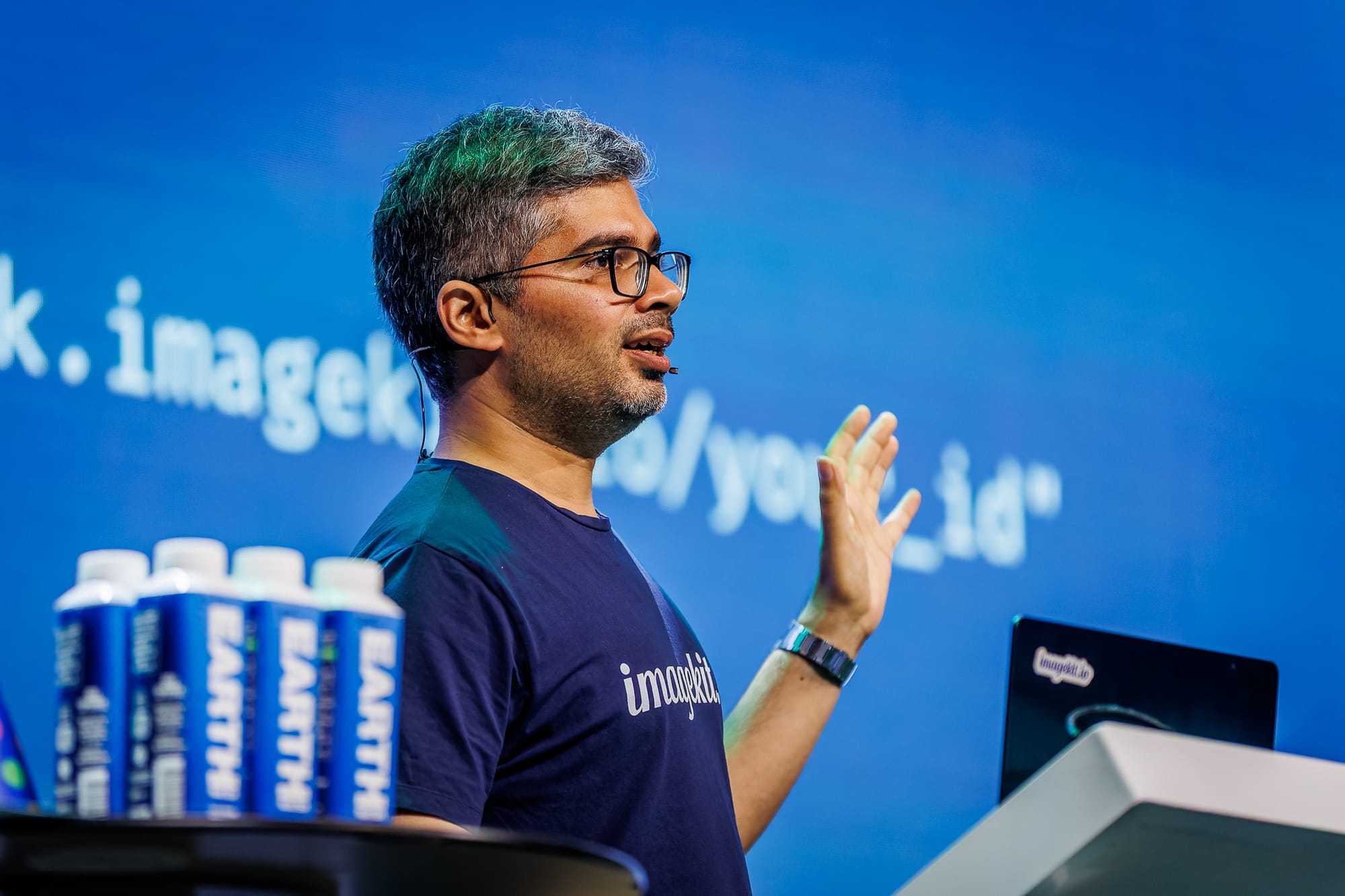
ImageKit is a sponsor of the React Summit Amsterdam 2026. In the lead-up to the event, Valentin, Sponsorship Manager at GitNation, talked with Rahul Nanwani, CEO & Co-founder of ImageKit, about developer marketing, the hidden signals that don’t reach the support inbox, and why showing up in person is a product investment, not just a marketing expense.
Valentin: Rahul, thanks for sitting down with us. React Summit Amsterdam 2026 is coming up, and ImageKit is returning as a sponsor. Let’s start with a broader question. Developer tools like yours live in a unique space - when they work, nobody notices. How do you market something that’s designed to be invisible?
Rahul Nanwani: That invisibility is both our greatest strength and our biggest challenge. Image and video optimization powers the modern web-resizing, compressing, delivering media at scale. But you’re right: no one notices until something breaks. Then suddenly everyone’s paying attention. The work of building for developers cannot happen behind a screen. That’s why we keep showing up.
Trial and Error: Learning What Doesn’t Work
Valentin: You’ve been to a lot of events. What did you learn from the ones that didn’t work out?
Rahul: Early on, we made the mistake every dev tools startup makes: assuming bigger is better. We went to AWS re:Invent. 50,000-plus attendees. But our budget was a fraction of what the companies around us were spending. It’s very difficult to stand out in a room like that.
The bigger problem was the audience itself. AWS offers over 200 services. Most attendees were there to learn about four or five of them-rarely anything adjacent to our world. Even with good conversations at the booth, there was no reliable way to find the handful of people in a crowd of tens of thousands who cared about media optimization specifically.
Valentin: So what changed?
Rahul: We realized we can’t go to such a large event with the kind of budget and focus that we want. We also learned to watch the audience composition. We’ve been to events with a lot of students rather than practitioners. We don’t expect to meet decision-makers at every event, but we do need to reach people who are actually building something at a company. React Summit Amsterdam sits at the opposite end of that spectrum.
Why React Summit Amsterdam?
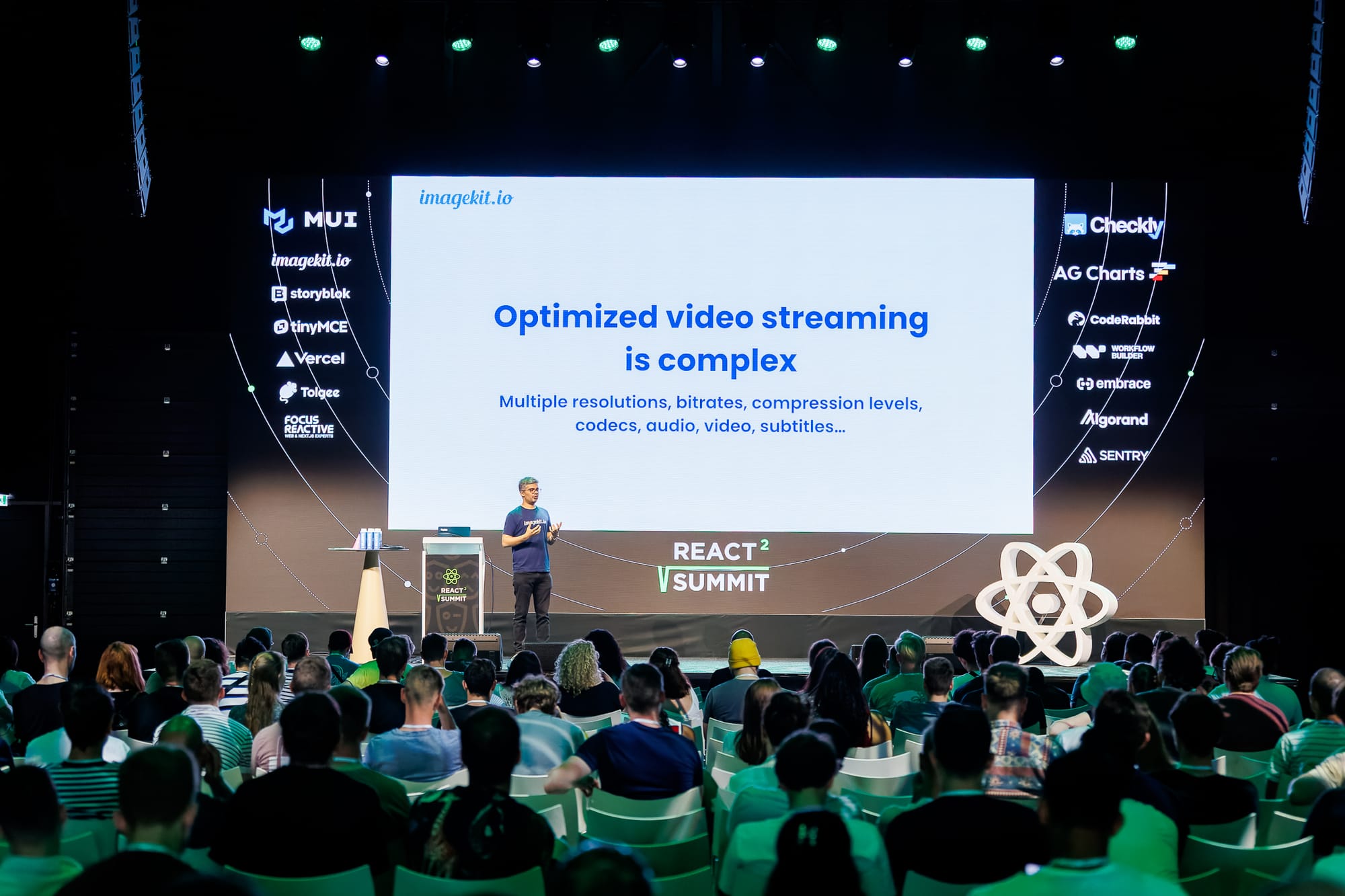
Valentin: That’s exactly why I wanted to talk. What makes React Summit different for ImageKit?
Rahul: React Summit brings together a highly relevant, front-end focused community. These are usually the engineers who actually implement ImageKit inside their organizations. The person in the room is often the person making the technical decision.
Front-end engineers at React Summit are not passive observers of the tools they use. They evaluate options, run proofs of concept, and advocate for adoption internally. Reaching them in a space where they are already focused on performance, developer experience, and shipping better products is a completely different conversation than reaching them through a cold email.
Valentin: And the product itself has been evolving fast.
Rahul: Absolutely. In the past year alone, we’ve added video smart cropping and an advanced video player. Companies are leading with video instead of static images now. Delivering that video at the right size, in the right format, to the right device - without writing encoding logic - is exactly what we’re built for.
But product updates only matter if the right people know they exist. The developer community is big. Not everyone knows about us or the problems we are solving. Frameworks change. SDKs change. Events like React Summit give us the chance to present what we are actually building right now, not what someone read about us two years ago.
What the Support Inbox Doesn’t Show
Valentin: You’ve mentioned before that conference conversations reveal things support tickets don’t. Can you give me an example?
Rahul: A large part of sponsoring an event is staying in touch with what developers actually need. Whether that’s new SDK features, new integrations, or simplifying something that currently takes too many steps. The scope of problems is wider than what we anticipate. The different tools companies use for legacy reasons, the challenges they face, their expectations—this is much wider than what you can understand by looking at support emails.
Here’s a concrete example. Early versions of some of our SDKs had a complex initialization flow for authentication. Instead of fighting through it, some developers would skip the SDK entirely and try to implement the upload API directly. Upload APIs are not simple. Multipart data, signed requests, error handling - it’s hard to get right from scratch. They would struggle, fail, and then give up on the integration.
Valentin: And that didn’t show up in ticket data?
Rahul: Developers who give up often don’t file tickets. They just stop. It takes an in-person conversation to hear a sentence like “I started implementing the upload myself because the SDK felt like too much.” That single comment reshaped how we prioritized work. We’ve since overhauled SDK initialization to be as close to zero-config as possible, and we continue to simplify it with each major release.
Valentin: That’s powerful. Any other surprises from events?
Rahul: Events also surface marketing channels we didn’t know existed. I remember learning that developers with eight-plus years of experience were discovering ImageKit not through any official channel, but because they’d watched a YouTuber demonstrate it in a tutorial. That kind of thing doesn’t show up in attribution data. You only learn about it when someone tells you in person.
Solving the Backburner Problem
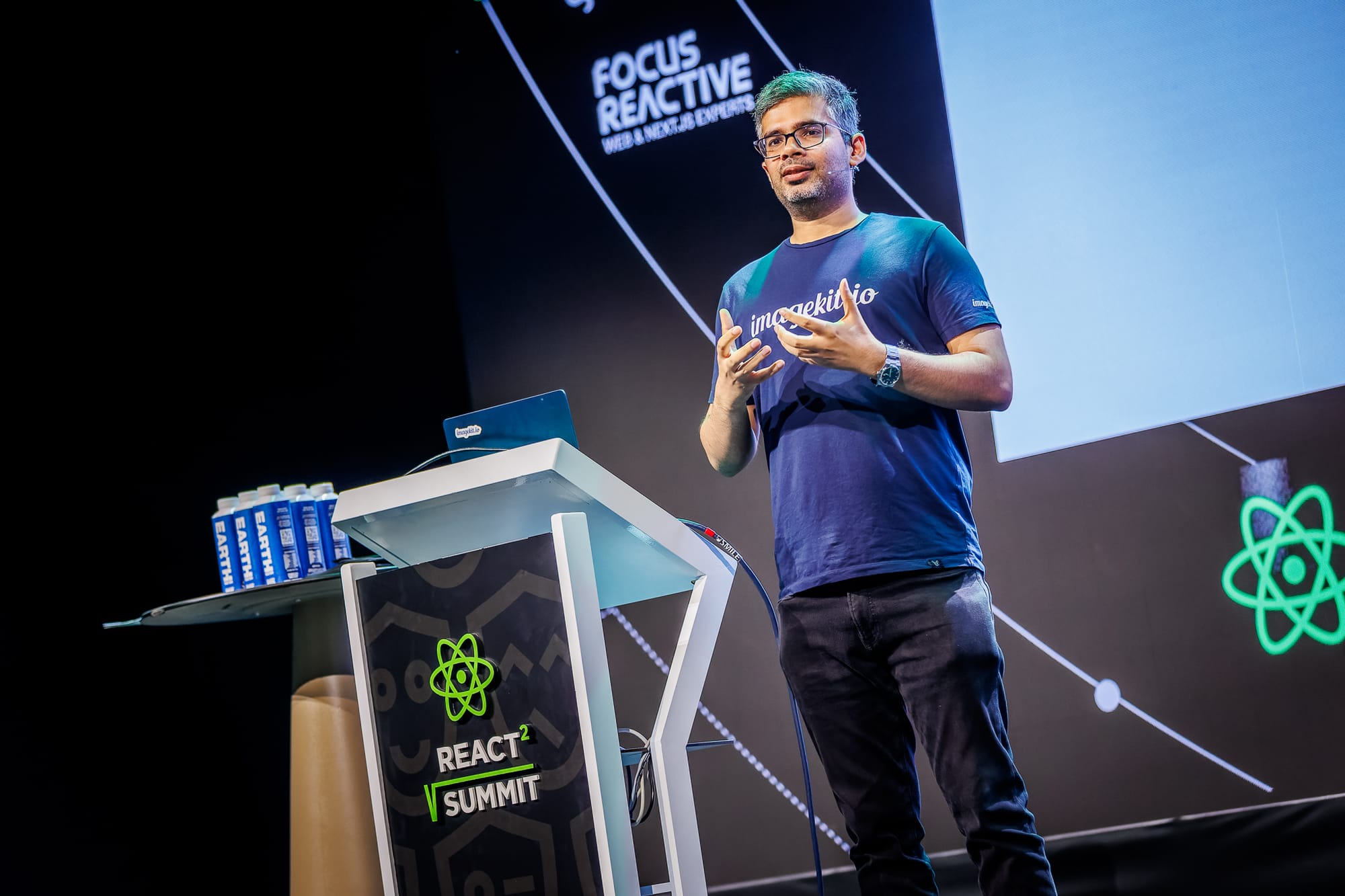
Valentin: Let’s talk about the problem itself. Most React developers know media performance matters, but they don’t always prioritize it.
Rahul: That’s exactly right. I call it the backburner problem. They know it matters. They just don’t think about it until something breaks.
Showing up at events creates more problem awareness and more solution awareness. Some developers have a problem they’ve been putting on hold because they didn’t know there was an easy fix. Being at React Summit gives us the chance to show them it doesn’t have to stay on the backburner. Given how easy the solution is, it can become part of how they build from day one.
And that last point matters. The goal is not just to help developers who are already in pain. It’s to shift how the next generation of React projects gets built from the start.
The Long Game
Valentin: Measuring ROI on conference sponsorships is notoriously difficult. How do you think about success?
Rahul: Honestly, measuring ROI is genuinely hard, and I don’t pretend otherwise. My definition of success is longer-horizon than most. It’s not about the number of badge scans at the booth. It’s about three things happening over time: more developers knowing what ImageKit is and what it solves, the product being a closer match to what those developers actually expect, and the platform integrating cleanly with the tools and frameworks they use day to day.
At each event, there are more developers who know about or have used ImageKit. We fill the gaps iteratively over years. That’s the compounding effect we’re building toward.
Valentin: It sounds like patience is part of the strategy.
Rahul: It is. In a developer tools market where trust is the actual currency, patience tends to win.
Final Advice for Dev Tool Companies
Valentin: Last question. If another dev tool company is on the fence about conference sponsorships, what would you tell them?
Rahul: I’d keep it direct. If developers are a major part of how your tool gets evaluated, implemented, or introduced inside organizations, it could be worth looking at. You are not buying a banner. You are buying proximity to the people whose opinions shape what gets built.
For us, React Summit Amsterdam is not a marketing expense. It’s a product investment. And for a platform built on that belief, the distinction makes all the difference.
Valentin: Rahul, thank you. We can’t wait to have ImageKit at React Summit Amsterdam 2026.
Rahul: Likewise. See you there.
For the past 11 years, GitNation has been at the forefront of organizing developer conferences in Europe and US. Interested in sponsoring our events? Contact us: [email protected]